Wednesday, September 24, 2014

The Ride to the Race

Wake up. Drink. Water, then coffee. Eat. Oatmeal, banana, honey, peanut butter, raisons. Mush. Mash. Paste. Pulp. Like something you would feed to an infant. Or livestock. Or the elderly. Clean your chain. Oil it. Clean the oil from the chain. Attach your saddlebag. Fill it with a repair kit. And sandals. And a change of clothes. Get dressed. Spandex, socks, shoes. A jersey with numbers pinned on the back. Numbers that hide your sponsors’ logos. Fill your water bottle. Finish your coffee. Clip on your helmet. Kiss your girlfriend goodbye. Out the door. On the road.


Pedal. Across Stark Street. Up 86th. A right on Burnside. Across the Max tracks. Careful not to get your thin tires caught in the groove. On to the bike path. The one that follows the 205. Pedal. Pass the bums that lounge beneath the bridges. Pass the smokers who lollygag on the path. Pass the dog walkers and the Saturday strollers. Swing a left. Cross the big bridge. The Glenn Jackson. The one that opened the year you were born. 1982. The one that sees over 100,000 automobiles a day. The one that is two miles long. The one that saw three men die during its construction. The one with four lanes going both ways. The one with a bike path smack dab in the middle of those eight lanes. Pedal. As cars fly towards you on your left side. Pedal. As cars zip by on your right. Seventy miles per hour. Their taillights disappearing in the distance.


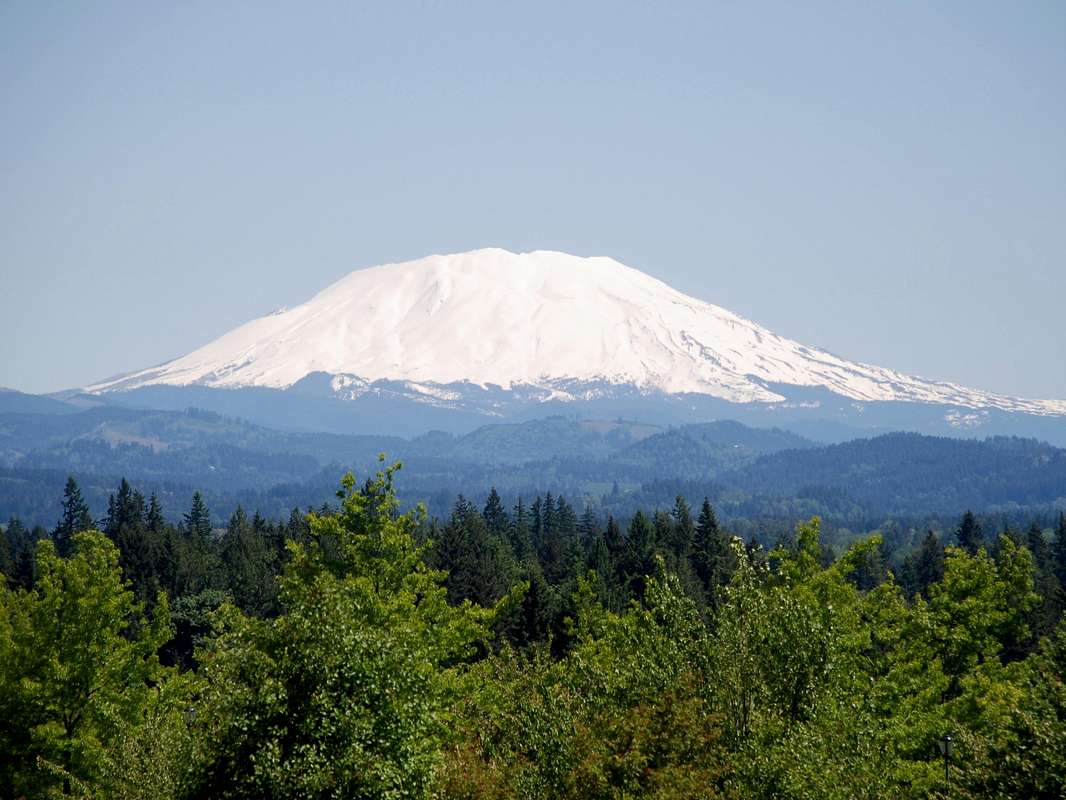
Enter Washington. Where pot is legal. Enter Vancouver. Named after George. The explorer. From British Royal Navy fame. The guy who gave Mount St. Helens its name. Along with Mount Hood. And Mount Rainier. All of which can be seen in the distance. All of which can be seen on this crystal-clear blue-sky day. Pedal. Uphill. Northeast. Right. Left. Right. Repeat. Right. Left. Right. Repeat. Think. About anything. But not about the race. Think. About life. About love. About death. No. Don’t think about death. Not while riding on these busy streets. Think. About society. About passion. About writing. About a new style. Call it scatter-shot. Scatter-shot writing. Here. There. Everywhere. Now. Then. Over again. Wow! Are people going to hate it…


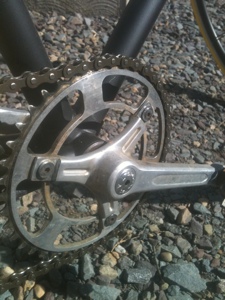
Pedal. On country roads with no shoulders. Pedal. As cars whip by. Cars that are too close for comfort. Focus on the white line. Not on the ditch to your right. Not on the ditch that falls five feet deep. Focus. On the road. Not on the cars. The cars with bicycles on their roofs. Cars with bicycles on their trunks. Trucks with bicycles in their beds. At least you know you’re going the right way. Pedal. Up hills. Steep hills that test your chain. Steep hills that test your legs. Pedal. Into the wind. Twenty miles per hour. The wind speed. Not yours. Uphill. Into the wind. Singlespeed. 38 by 16. Five miles per hour. At best. Pedal.


Fly. Downhill. Finally. Fly. As fast as you can go. Beneath a canopy of trees. Shade that blocks the midday sun. The midday sun that’s scorching the Earth. 90 degrees and climbing. Fly. Down the winding road. Until it comes to a dead-end. Until you’re at the venue. Alderwood Park. Thirty miles from home. Find your team. Find your tent. Drop your bag. Refill your water. Study the course. Eat a gel. Use the bathroom. Line up for your race. Listen for your name. Hear it. Roll to the starting line. Listen to the official. “Single speeds ready.” Listen for the whistle. Go!


Monday, September 15, 2014

Adventures in Urban Hiking


I’m not exactly sure what’s in the pipe, but I can guarantee it has a funny name—something like L.A. Woman, or White Widow, or Blueberry Kush. We take long drags. We hold the smoke in our lungs. We fill the living room with clouds that smell faintly like skunk. And then we head outdoors, through the backyard, past the chickens, sunglasses hiding our bloodshot eyes. We stick to the back alleys, far from the traffic, hidden from the hustle and bustle. There is no designated route—no little blue circles with black silhouettes of a day hiker telling us where to go. No red diamonds. No signs saying “Stay on Trail.” We go where we want—right, left, straight, another right, up a staircase, down a dirt trail. We pass urban artifacts, abandoned tires, light pole art, million dollar homes, hundred dollar cars, directional signs telling us that we’re far from everywhere. We hit the main drag—Haight Ashbury for Trophy Kids. The weirdoes are out, with their fixed-gear bikes and their fluorescent hair and their punk rock t-shirts and their backpack hydration systems and their tiger-print sunglasses and their urban-hiking footwear. They sell garbage on the side of the road, masquerading it as hip décor and vintage wear. They sell garbage in trendy restaurants with clever names, charging rich prices for poor quality. Temporary bliss is all we achieve as we dump that garbage in our bodies.
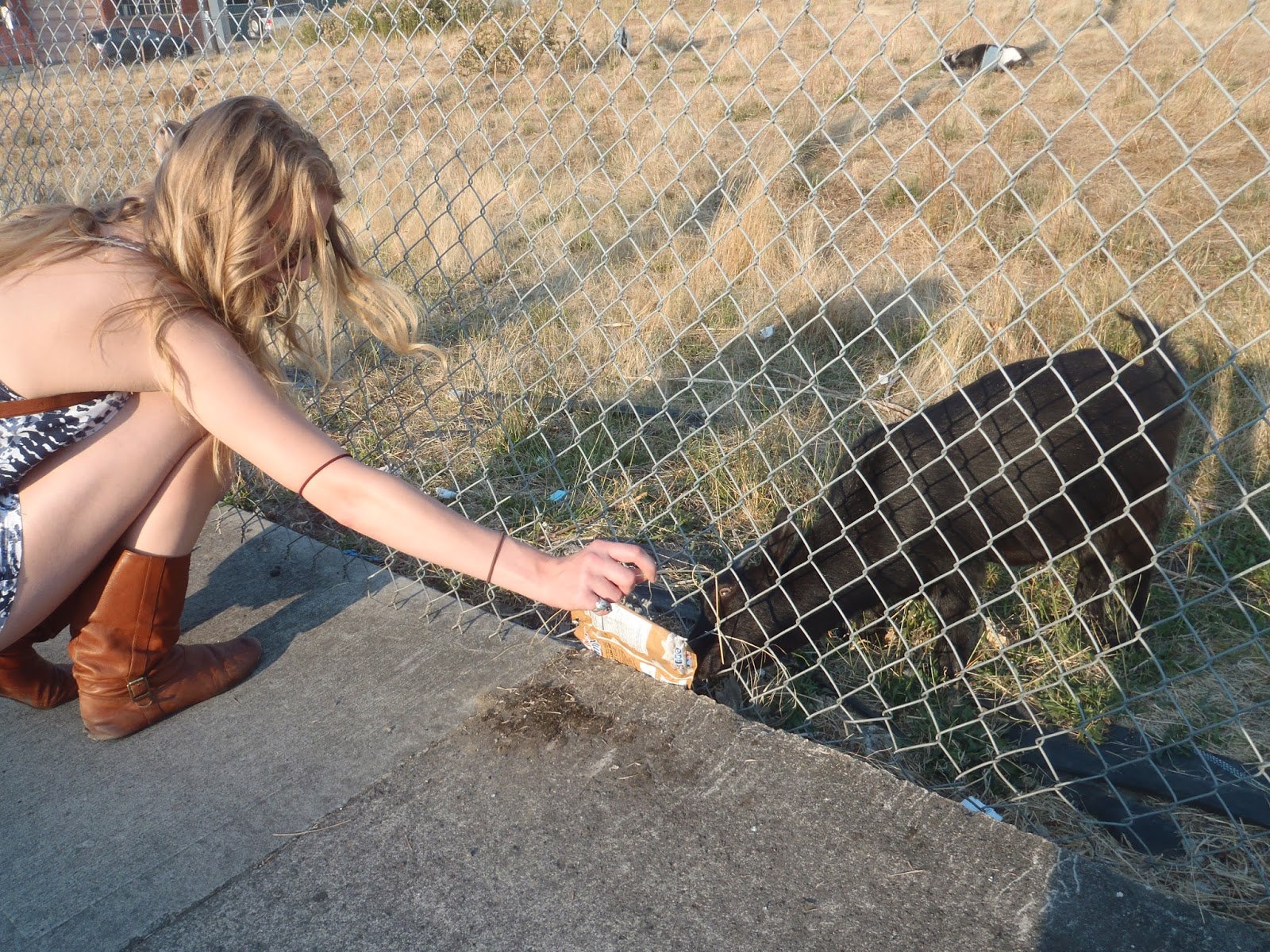
We stop at a hole-in-the-wall, where I give a few quick billiards lessons. We stop at a parlor and have a slice. We stop at a tavern that has a Founding Fathers theme. On the wall, George Washington crosses the Delaware. Behind the bar, the tender entertains us with stories of her drug-filled exploits. Her hair is grey and we are taken aback, because when you think about hard drugs, you usually don’t think about middle-aged women. “Have fun on your walk-about,” she says as we shuffle out the door. In the heart of the city, we pass urban wildlife—goats, bums, automobile enthusiasts, garbage collectors, a possible werewolf. “That’s not a werewolf,” Katelin says. “Prove that it isn’t,” I demand. She can’t. We head into the tunnels, where drunken men used to be shanghaied. Now, drunken men sit at bars and just get drunker. As do we. It’s dark when we leave. The street-kids are out, taking up space on the sidewalks, hoping for change. “Make us famous!” They yell as I snap a photo of them.  We stumble on a parade. Or is it a protest? It’s hard to tell. The police are out in full force. We light up, in the middle of the city, cops all around us. We don’t care. Neither does anybody else. We’re drunk. We’re high. We’re tired. Six miles from where we started, so we hitch a ride home, feeding singles into electronic jaws, pulling a thin yellow strand at our stop. 


Tuesday, September 2, 2014

What I Talk About When I Talk About the Buffalo Bills


I never thought this day would come. I’m standing on the waterfront in downtown Buffalo, among a crowd of a hundred-thousand strong, watching the ribbon-cutting ceremony for the brand new Ralph Wilson Stadium, the NFL’s most advanced, state-of-the-art arena, complete with a retractable dome and the world’s largest scoreboard. Everyone who is anyone is here: Andre Reed, Steve Tasker, Marv Levy, Thurman Thomas, Bruce Smith, Fred Smerlas—all the greats—the list goes on and on. Buffalo Mayor Scott Norwood cuts a red, white, and blue ribbon with a pair of over-sized scissors as the Goo Goo Dolls perform a rendition of “Shout.” Speeches are given: three-time Super Bowl MVP Jim Kelly tells the story of what it felt like to watch now-Mayor Norwood split the uprights to end Super Bowl XXV, and how he never imagined that the team would go on to win six more in a row; Kelly’s replacement, two-time Super Bowl MVP Todd Collins, reminisces over his five Super Bowl victories; and our current quarterback, Russell Wilson (who we stole in the third round of 2012 draft), talks about the future of the team and how proud he is to reside in Buffalo, New York, or what is commonly referred to as “Football City, U.S.A.” When the current President of the United States, Mr. O.J. Simpson, unexpectedly shows up to unveil a fifty-foot tall portrait of the late Ralph Wilson, the crowd goes absolutely wild…and then I wake up.


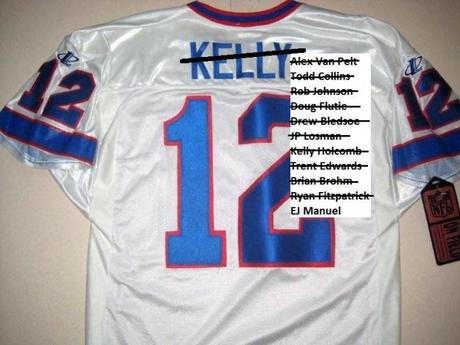
It’s hard. Being a Bills’ fan, that is. Sure, I can dream—like I did in the above paragraph—but the truth is there are few other professional sports franchises that are as heartbreaking to root for. Everybody from Buffalo knows that Scott Norwood missed that 48-yard field goal to end Super Bowl XXV, and that the Bills went on to lose four in a row; Todd Collins turned out to be a bust, one among many lousy draft picks, which seem to have become a yearly tradition; and as for O.J. Simpson, well, let’s just say that he didn’t become president. The Bills haven’t even made the playoffs since 1999—the longest current drought in the NFL—making them the only team who hasn’t seen the postseason this century (I blame it on the “Doug Flutie Curse,” but that’s a different story for a different day). There is no new stadium, and with the passing of Ralph Wilson earlier this year, millionaires are currently targeting the team, many with hopes of a future relocation in mind (you weren’t fooling anyone, Bon Jovi). No, it’s not easy being a Bills’ fan.


I’ll be 32 years old this fall and I still sleep with a Buffalo Bills blanket. I don’t live in New York anymore, but like many of my generation who moved away in search of work, adventure, or better weather, I still hold a special spot in my heart for Western New York, and for the Buffalo Bills in particular. While others worship their gods on Sunday, I worship a mediocre football team that has become the laughing stock of the entire league. Even three-thousand miles away, I still hear the jokes, at the local bar, as I sit in the corner by myself and watch the games on the only television in the joint that isn’t a flat-screen. When I tell people which team I follow, they almost always reply with the same two words: “I’m sorry.” But that’s just the way things are when you choose to live so far away from something you’re truly passionate about. Regardless, I still get excited when I see anything that has to do with the Bills: a license plate holder, a baseball cap with the standing buffalo logo, a homeless man wearing a Bills jacket (for some reason unbeknownst to me, most of the Bills merchandise I see is being worn by the homeless, which might seem fitting). As I currently reside in the Pacific Northwest, it would be awfully convenient to convert to a Seahawks fan (everybody else here has), but I just can’t bring myself to do it. I just can’t get the Buffalo Bills out of my blood.

          
The preseason has just ended and again the Bills look absolutely awful, but still, I dream—that’s just what Bills fans do. What else can we do? Maybe we played bad on purpose, to trick the other teams into thinking we’re no good. After all, we did have a team in the early 90’s that lost all of their preseason games, yet still made it to the Super Bowl. Maybe the signing of Kyle Orton over the weekend will light a fire under the young E J Manuel; or, maybe, Kyle Orton will win the starting job and become the next Kurt Warner, leading a young Bills team to their first championship. Maybe we don’t need a good offense. Maybe our defense will be strong enough to carry the team all the way, like the Ravens in 2000. Or maybe we’ll just be mediocre, like last year, and the year before, and the twelve seasons before that. But I don’t think so. I think this is the year we break out. The year people around the nation start talking about the Buffalo Bills again. The year dreams become reality. No, it’s not easy being a Bills’ fan, but I wouldn’t have it any other way. My 2014 prediction: 10-6 with a wildcard playoff berth. Go Bills!


Tuesday, August 26, 2014

The ALS Ice Bucket Challenge, and Why We Do It


            On June 1, 1925, New York Yankees manager Miller Huggins needed someone to pinch hit for shortstop Pee Wee Wannninger. He went to his bench and chose a 22 year-old left-handed hitter named Lou Gehrig. The next day, Gehrig took over the regular first base duties from Wally Pipp and for the next fourteen years, he never missed a game. While compiling an implausible streak of 2,130 consecutive games, Gehrig played through illness, broken bones, and concussions, never once complaining, never once asking for a break. During that span, he put up numbers that still have not been surpassed by a first baseman to this day, including most RBI’s, most runs scored, and highest on-base percentage, among others. Nicknamed “The Iron Horse,” it appeared as if nothing could stop Lou Gehrig. But when the 1939 season rolled around, the 37 year-old All-Star suddenly lost all the power in his swing and all of his speed on the base paths. On May, 2nd, Gehrig benched himself. He would never again play another game of baseball. Two years later, he would be dead.
            Lou Gehrig suffered from Amyotrophic lateral sclerosis (ALS), also known as motor neuron disease (MND), or Charcot disease. In the United States today, it is commonly referred to as Lou Gehrig’s disease, named after its most famous victim. ALS is a neurodegenerative disease characterized by muscle spasticity, muscle atrophy, dysarthria, dysphagia, and dyspnea. In layman’s terms, the disease causes its victim’s muscles to stop working, usually to the point where they can’t move, and eventually to the point where they can’t even speak, swallow, or breathe. The majority of people diagnosed with ALS will die within three to five years from the onset of symptoms. There is no cause for ALS. There is no cure.
            Two months ago, barely anybody in the United States knew what ALS even was. Personally, only because he's my favorite baseball player of all time, I did know that Lou Gehrig died from a horrible disease that now bears his name, but that’s about it. I didn’t know that it was called ALS. I didn’t realize that it killed so quickly. I didn’t realize that there is still so little that can be done for its victims. Like most people, I didn’t know much. And then people started pouring buckets of ice water over their heads.
            Cold water challenges, such as the “polar plunge,” have been around for a long time, often used to raise money for charity, but never before has such a challenge taken over the hearts and minds of an entire country. The ALS Ice Bucket Challenge first gained national attention on June 30th of this year when personalities on the Golf Channel performed the challenge live on-air. On July, 15, Hall of Fame golfer Greg Norman challenged Matt Lauer to perform the task on the The Today Show. The rest, as they say, is history.      
But with anything that gains national attention, there will be naysayers. Some Catholic organizations have called for a boycott due to the use of embryonic stem cells in ALS research. So, I guess it’s all right to cover up years of child molestation inside the church, but not to attempt to cure a horrific disease. Pamela Anderson has criticized the challenge due to the use of animal experimentation in ALS research. Hey Pamela, how do you think they developed all that makeup you’re wearing, and those products you put in your hair, and your fake boobs? Others have noted the waste of water, or the carbon footprint caused by producing the ice. To all those people: Do you have a lawn? Do you take daily showers? Do you drive a car? Are you alive? Then maybe you shouldn’t be pointing fingers. Others accuse the challenge of being self-congratulatory, focusing on fun rather than donating. But if that was the case, then how has the ALS Ice Bucket Challenge raised several years’ worth of donations in just a few weeks’ time?
            If you do a little research, it’s easy to find something wrong with any charity. Lance Armstrong created an entire foundation to help draw attention away from the fact that he was a lying cheater, but did it help people nonetheless? The CEO of Goodwill pays himself a higher salary than any other CEO of a non-profit organization, but isn’t he still giving less fortunate people a shot at a better life? The Susan G. Komen Foundation sues other charities for using the term “race for the cure,” but aren’t they still making an impact when it comes to the fight against breast cancer?
The point is that every organization has its faults. If you don’t want to give to a charity due to your personal beliefs, then simply choose another charity to support. The 2013 “word of the year” was “selfie.” Is that the kind of narcissistic world you want to live in? At least, for the first time in a long time, our public conscience has shifted from self-obsession to helping others. And sure, it might just be a fad, and next month we’ll probably forget all about it and move onto something else, but I don’t recall so much negative controversy over the Harlem Shuffle, which didn’t raise any money for any worthy cause. At least the Ice Bucket Challenge is helping to open our eyes. I mean, seriously, how much did you know about ALS two months ago?
I was nominated to do the Ice Bucket Challenge by my friend Chris, and in turn, he pledged to donate a sum of money to a local Portland non-profit. I in turn nominated my entire bicycle race team, pledging $2 for each person who completes the task. If everybody does it, it will be over $50, which may not seem like much, but it’s what I can give. And since the ALS foundation seems to being doing just fine right now when it comes to charitable contributions, I will be donating to the Boys and Girls Club of America, an organization that had a large impact on my life growing up. So, choose a charity, choose a challenge, have some fun while you’re at it, and take pride in what our society is accomplishing right now. I know I am.


Tuesday, August 19, 2014

Playing the Ponies


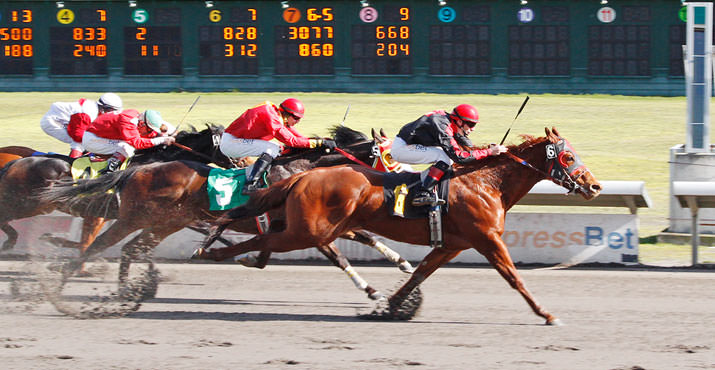
According to the Chinese Zodiac, 2014 is the Year of the Horse, so what better time to celebrate these magnificent creatures? But how does one celebrate an animal? Dogs and cats are easy—you simply purchase one and love it with all of your heart. Pigs and cows are even easier—you simply purchase a piece of one and eat it with all of your appetite. But horses are a bit trickier. Sure, I could buy a horse, but living in an urban setting with a backyard smaller than a volleyball court, it just doesn’t seem feasible. And, yes, I could eat a horse, but I already do that every time I go to Taco Bell. Another option would be to get involved in a riot so large that the mounted patrol needs to be called in, but then again, being clubbed in the face by a police officer on a horse isn’t really much of a celebration, is it? So, I’m going with the easiest, most practical option—off to the racetrack!


Horseracing is one of the world’s oldest sports. As long as humans have been riding the animals, we’ve been racing them, dating all the way back to Ancient Greece, Babylon, Syria, and Egypt. Today, horseracing is practiced all over the world, ranging from sprint distances as short as a few hundred yards to multi-day endurance races traversing courses over 500 miles long. Some races incorporate obstacles, others, harnesses, but the most common are simple flat races, typically run around an oval track, with a horse carrying a jockey. Still, flat races can be run at several different distances, and are generally broken down into two categories: conditions races and handicap races. In conditions races, every horse carries the same amount of weight, while in handicap races, each horse is assigned a weight depending on their ability. And if any of this seems complicated to you, wait until you here about the betting.


Win. Place. Show. Exacta. Trifecta. Superfecta. Daily Double. Pick Three. Pick Four. Pick Five. Besides the word “win,” if you aren’t familiar with horseracing, the rest of those terms would probably seem foreign to you. And they’re just the tip of the iceberg. When you initially look at a standard race program, you’d think one would need a Ph.D. to interpret all the signs, symbols, abbreviations, and numbers. For every horse in every race, the program appears to describe every possible detail, from the horses past race results to the course conditions during those races; from the post position to the stretch call; from the size of the field to the wind conditions; from the Equibase® Pace Figure to the Equibase Speed Figure®; from who used to own it to who currently owns it; from who trains it to which jockey races it. Plus more. Much more! For a layman, it’s downright intimidating. And that’s why I base all of my picks solely on the horse’s name.


It’s a sunny Sunday at Portland Meadows, and since this is a live sporting event, I’m ready to yell at some horses! (see: An Idiot’s Guide to Yelling, 7/22/14). It’s the third race of the day, at a distance of 5 ½ furlongs (a furlong is 220 yards, or 1/8 mile), and I’ve just won a $10 gambling voucher for sinking a beanbag in a corn hole. Now, I only need to decide which horse to bet on, and even though there are only seven horses in the field, four of them have outstanding names: Southern Influence, Street Jive, Call For The Wild, and JJ’s Gypsy. I go with my gut and throw everything down on Call For The Wild to show, which means he only has to come in the top three. Before the race even begins, my horse won’t get into the gate. I take that as a good sign—he’s antsy; he wants to race. The bell rings and they’re off. Call For The Wild has a horrible start—last place. He passes a horse on the back stretch, and two more around the turn. One more and I’m in the money! Here they come, down the home stretch. Kirkoroth’s in the lead; JJ Gypsy sitting pretty in second. The battle is for third. Call For The Wild and Street Jive are neck and neck. They’re approaching the finish line. Looks like it’s going to be a photo-finish…and Call For The Wild takes it by a nose! Just like that, I turn ten dollars into thirteen dollars. Do you realize how much Taco Bell I can buy with that?


Tuesday, August 12, 2014

A White American Male on India Pale Ale

For the love of beer, I drink. Since before I can remember, it has been my alcoholic beverage of choice. Sure, there was a short period in my life when I dabbled in hard liquor, and an even shorter phase when I became somewhat obsessed with wine—very, very cheap wine. But for the most part, it’s always been beer that has satisfied my craving for a drink after a long day. Or after a short day. Or, on a rare occasion, first thing in the morning.


I began drinking beer as a young child, stealing sips from my father’s Schmitt’s, and enjoyed the taste from the very first time it touched my tongue. When I was in high school, it was mostly Labatt’s or Molson (I grew up very close to the Canadian border), and in college, whatever was cheapest, usually Milwaukee’s Best or Natural Ice—two of the foulest tasting beers on Earth (in those days, consuming beer had little to do with flavor). I then wasted most of my young adulthood throwing back 16 ounce longnecks of Genesee, before moving to the West Coast at the age of 25 and realizing for the first time, just how little I really knew about beer.

Microbreweries have changed the way I think about beer. I used to think that beer was beer. Sure, the cheaper the beer, the worst it tasted, but it all primarily had a flavor somewhat similar to one another. Craft brews, on the other hand, taught me that different beers can have different tastes, along with aromas, thicknesses, and even hangovers. I’ve enjoyed beers that have been flavored with everything from coffee and chocolate to blueberries and bourbon. I tried everything I could get my lips on and it didn’t take me long to figure out that the India Pale Ale (IPA) was my beer of choice. But just because you know which type of beer you prefer, doesn’t mean you know which brewer makes your favorite. So, that’s exactly what I set out to discover.


The advertisement in the paper said, “Work for beer!” so I signed up to volunteer at the Portland International Beerfest. In return for free entry the next day, which included a tasting glass and ten drink tickets, I poured beer for drunk people for three hours. It was somewhat strange to find myself on the opposite side of the bar, handing others beer instead of drinking it myself, but I held strong all night and never once snuck a sip. The time actually flew by, thanks to having one of the more popular beers at the festival: a one-ticket sampler for an IPA called “Hoppy Bitch.” All night, drunken people—mostly young males—handed me their tickets just so they could say the words “Hoppy Bitch” and laugh. A great marketing ploy, if you ask me, for I certainly planned on returning the following night for a taste myself.


In the early 18th century, when Britain was colonizing India, the beer they sent to their troops was oftentimes spoiling because of the long sea voyage. They solved this horrific problem by adding more hops and alcohol, both having natural preservative value. Thus, the IPA was born. Recently, the West Coast has become a hotbed for IPA production, with breweries often pushing the envelope with strength and bitterness. IPA’s tend to have an ABV (Alcohol by Volume) of 5%-7.5%, and an IBU (International Bitter Unit) between 40 and 65. The higher the IBU, the more bitter the beer.


I spent Saturday afternoon conditioning my pallet with various IPAs and studying the Beerfest program, determining exactly which beers I needed to sample. Though it’s an “international” beer festival, only one brewery from outside the U.S. was contributing an IPA. I decided, that to find out which one was the best, I would try every one that was two tickets or less (It’s not that I believe that expensive beers aren’t worthy, but I’d rather not become obsessed with something I simply can’t afford to drink on a regular basis). Unfortunately, many of the IPA’s were already sold out by Saturday night (including the “Hoppy Bitch”), but here’s a list of all the ones I tried:

·         Ninkasi Total Domination
·         Lagunitas Sucks
·         Caldera IPA
·         Lompoc Pamplemouse IPA
·         Firestone Walker Wooky Jack Black Rye IPA
·         Lagunitas Maximus
·         Lagunitas A Little Sumpin’ Wild Ale
·         Brewdog Brewery Libertine Black Ale (Scotland)
·         Brewdog Brewery Hardcore IIPA (Scotland)
·         Fort George The Optimist

One would think that when tasting this many beers in a row, they would all taste quite similar by the end—that your judgment would be too impaired to choose a favorite. But with IPAs, that’s simply not the case. Each IPA has such a distinct flavor, depending on its strength and the type and amount of hops used, that you will almost instantly know if it’s the right beer for you. For me, the right beer was easy to choose. Out of the ten I tried, there was one that was far and away my favorite. The clear winner—Brewdog Breweries Hardcore IIPA (sorry West Coast breweries, but Scotland has you all beat).


Take into account that these were just the beers I tried on this one day. There are plenty of other IPA’s that I truly love. Please use the comment section below to add your favorite. 

Tuesday, August 5, 2014

How to Circumnavigate Mount Hood in 100 Miles or Less

Mount Hood is one the most accessible mountains in the world. Thousands of people go up it every year and even more go down—it is home to the only ski lift that operates 365 days a year—but few people take the time to circumnavigate the active volcano, at least in something other than an automobile. So, on a scorching hot summer day, my good friend Dave and I set out to accomplish just that.


We head out early—6:30 a.m.—to ride some big miles. Dave meets me at my house near Mt. Tabor and we take the 205 bike path south before heading east on the Springwater Corridor, which is named after the former railroad line that followed the same route from 1903 to 1989, before it was converted into the 21 mile paved recreational trail that now sees over one million users annually. In the town of Boring, the trail disappears and we cross Highway 212, taking SE Richie Rd until it ends, and then a left on SE Kelso Rd. The rolling country roads provide little to no shoulder, but make up for it with the most incredible of backdrops—we take in an awe-inspiring view of Mount Hood, which from the west appears as beautiful as any mountain, anywhere in the world. Because it’s the weekend, and because it’s early, there is little traffic, and much to my surprise, not one hillbilly in an oversized truck slows down to yell at us (see: An Idiot’s Guide to Yelling, July 22, 2014).


When we hit Rt. 26, also known as the Mt. Hood Highway, we have a choice to make: take a right and ride with heavy traffic on the super busy four-lane highway, or go straight and take the longer, hillier, more relaxing, scenic route. We opt for the scenic route, dodging traffic across 26 like characters in Frogger, and continuing straight on Kelso Rd until it ends. We take a right on SE Bluff Rd, follow it to Sandy, and head east through the small town, before taking a left on SE Ten Eyek Rd. We continue on this road until it turns to SE Marmot Rd, which follows a seven-mile ridge known as the “Devil’s Backbone.” It received its hellish name because it was such a daunting task for Oregon Trail pioneers to descend their wagons down it, but today the rural road is one of the most beautiful bicycle rides in all of Northwestern Oregon—highly recommended for anyone who has a morning to kill. We keep on Marmot, which eventually turns into E Barlow Trail Rd. We follow this until it ends, before taking a right on E Lolo Pass Rd, which brings us into the town of Welches and back to Route 26. There’s a café/bakery on the corner—the last stop for supplies for a long while. We opt to cross the highway to use the bathroom and fill our water bottles at the US Ranger Station.


Again we have another choice and again we decide to bypass Highway 26, riding east along its shoulder for less than a mile, before swinging a right on Still Creek Road. The pavement quickly ends and we head up the gradual incline of a narrow dirt road that parallels the small stream for which it got its name. There are no other vehicles in the thick forest, which is overgrown with tall monstrous pines whose shade keeps us cool from the late-morning sun. The road spits us out at Trillium Lake, where Dave gets a flat tire, which isn’t a big deal, because if you’re going to get a flat, there’s no better place to have it happen than at Trillium Lake, where the scenery is as good as it gets. As he works on his bike, we are granted an awe-inspiring view of Mount Hood, which from the south appears as beautiful as any mountain, anywhere in the world.


We take Trillium Lake Road back to Highway 26 and then follow the Mount Hood Highway as it heads north and becomes Route 35. We climb up to Bennett pass, which at 4,650 feet is as high as we’ll reach all day, and then go for a ride as we descend down the other side. We don’t quite reach 40 mph, but we come close as we tuck our bodies in as low as we can and bomb down a slope that seems to go on for so long that I eventually start to look forward to some more uphill. It eventually flattens out and we take a left on Baseline Rd and follow it into the tiny town of Parkdale. I look up at the mountain to my left and it reminds me of an enormous ice cream sundae with hot fudge swirls. This is a bad sign—if you start dreaming about food while riding big miles, that usually means it’s too late; that usually means you should have eaten thirty minutes ago. Fortunately, Parkdale has many food options to choose from—a brewery, a burger joint, and a BBQ. Unfortunately, we’re short on time and have to settle for a quick bite from the local grocery store. We eat a small lunch of deli wraps, chips, and bottles of soda, as we marvel at an awe-inspiring view of Mount Hood, which from the east appears as beautiful as any mountain, anywhere in the world.


We’re back on our bikes in no time, following the Dee Highway north before taking a left on Lost Lake Road. It’s close to 100 degrees outside and what shade we should have disappeared with the trees when the area was clear-cut for lumber. The sun bakes us as we travel uphill towards Lolo Pass. When we leave Lost Lake Road for the unpaved NF-18 (National Forest Route 18), the forest reappears, as does the cool shade, but it might be too late—the heat has gotten to Dave. He gets off his bike and pukes up his lunch. It’s sad to see a perfectly good meal go to waste, but it’s even worse to see a fellow rider in such agony. This will turn out to be the longest ride Dave has ever done in his entire life, but right now we still have fifty miles to go.


Normally, I might be concerned; I might be wondering how we’re going to get out of these woods. But with Dave, I’m not worried, for he’s one of the toughest men I’ve ever had the pleasure to know (when he’s not completing epic bicycle rides, he’s choking people out at jiu-jitsu tournaments). And I don’t know what you would expect a tough guy to do in a situation like this, but I’d expect him to drink some mountain water straight out of a stream and get back on his bike without complaining. And that’s precisely what Dave does. We complete the 3,415 foot climb up Lolo’s pass, which brings us so close to the mountain’s peak that you feel as if you can almost reach out and touch it—an absolutely awe-inspiring view of Mount Hood, which from the north appears as beautiful as any mountain, anywhere in the world.


We fly down Lolo Pass Road, which is paved, and find ourselves again in the town of Welches, filling up our water bottles at the Ranger Station. On the way back, we opt to take the more direct route, riding with traffic on Route 26, back to the city. The entire ride comes out to just over 160 miles, with almost 11,000 feet of elevation gain. But if you want to do just the loop and say that you circumnavigated Mount Hood, then I would suggest driving to the Welches Ranger Station and parking in their large lot. From there, the ride should be about 80 miles, completely circling Mt. Hood, which from any angle appears as beautiful as any mountain, anywhere in the world.