Tuesday, August 12, 2014

A White American Male on India Pale Ale

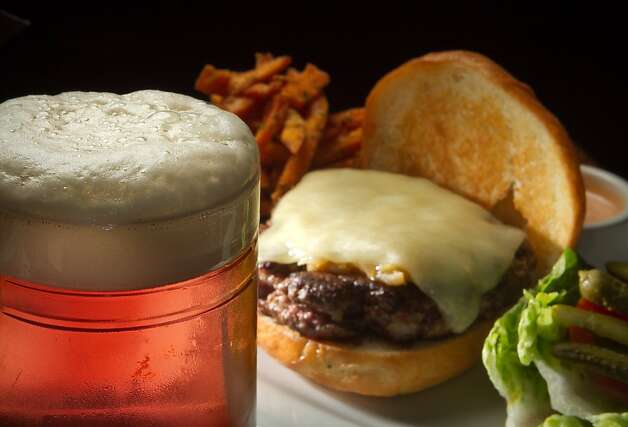
For the love of beer, I drink. Since before I can remember, it has been my alcoholic beverage of choice. Sure, there was a short period in my life when I dabbled in hard liquor, and an even shorter phase when I became somewhat obsessed with wine—very, very cheap wine. But for the most part, it’s always been beer that has satisfied my craving for a drink after a long day. Or after a short day. Or, on a rare occasion, first thing in the morning.


I began drinking beer as a young child, stealing sips from my father’s Schmitt’s, and enjoyed the taste from the very first time it touched my tongue. When I was in high school, it was mostly Labatt’s or Molson (I grew up very close to the Canadian border), and in college, whatever was cheapest, usually Milwaukee’s Best or Natural Ice—two of the foulest tasting beers on Earth (in those days, consuming beer had little to do with flavor). I then wasted most of my young adulthood throwing back 16 ounce longnecks of Genesee, before moving to the West Coast at the age of 25 and realizing for the first time, just how little I really knew about beer.

Microbreweries have changed the way I think about beer. I used to think that beer was beer. Sure, the cheaper the beer, the worst it tasted, but it all primarily had a flavor somewhat similar to one another. Craft brews, on the other hand, taught me that different beers can have different tastes, along with aromas, thicknesses, and even hangovers. I’ve enjoyed beers that have been flavored with everything from coffee and chocolate to blueberries and bourbon. I tried everything I could get my lips on and it didn’t take me long to figure out that the India Pale Ale (IPA) was my beer of choice. But just because you know which type of beer you prefer, doesn’t mean you know which brewer makes your favorite. So, that’s exactly what I set out to discover.


The advertisement in the paper said, “Work for beer!” so I signed up to volunteer at the Portland International Beerfest. In return for free entry the next day, which included a tasting glass and ten drink tickets, I poured beer for drunk people for three hours. It was somewhat strange to find myself on the opposite side of the bar, handing others beer instead of drinking it myself, but I held strong all night and never once snuck a sip. The time actually flew by, thanks to having one of the more popular beers at the festival: a one-ticket sampler for an IPA called “Hoppy Bitch.” All night, drunken people—mostly young males—handed me their tickets just so they could say the words “Hoppy Bitch” and laugh. A great marketing ploy, if you ask me, for I certainly planned on returning the following night for a taste myself.


In the early 18th century, when Britain was colonizing India, the beer they sent to their troops was oftentimes spoiling because of the long sea voyage. They solved this horrific problem by adding more hops and alcohol, both having natural preservative value. Thus, the IPA was born. Recently, the West Coast has become a hotbed for IPA production, with breweries often pushing the envelope with strength and bitterness. IPA’s tend to have an ABV (Alcohol by Volume) of 5%-7.5%, and an IBU (International Bitter Unit) between 40 and 65. The higher the IBU, the more bitter the beer.


I spent Saturday afternoon conditioning my pallet with various IPAs and studying the Beerfest program, determining exactly which beers I needed to sample. Though it’s an “international” beer festival, only one brewery from outside the U.S. was contributing an IPA. I decided, that to find out which one was the best, I would try every one that was two tickets or less (It’s not that I believe that expensive beers aren’t worthy, but I’d rather not become obsessed with something I simply can’t afford to drink on a regular basis). Unfortunately, many of the IPA’s were already sold out by Saturday night (including the “Hoppy Bitch”), but here’s a list of all the ones I tried:

·         Ninkasi Total Domination
·         Lagunitas Sucks
·         Caldera IPA
·         Lompoc Pamplemouse IPA
·         Firestone Walker Wooky Jack Black Rye IPA
·         Lagunitas Maximus
·         Lagunitas A Little Sumpin’ Wild Ale
·         Brewdog Brewery Libertine Black Ale (Scotland)
·         Brewdog Brewery Hardcore IIPA (Scotland)
·         Fort George The Optimist

One would think that when tasting this many beers in a row, they would all taste quite similar by the end—that your judgment would be too impaired to choose a favorite. But with IPAs, that’s simply not the case. Each IPA has such a distinct flavor, depending on its strength and the type and amount of hops used, that you will almost instantly know if it’s the right beer for you. For me, the right beer was easy to choose. Out of the ten I tried, there was one that was far and away my favorite. The clear winner—Brewdog Breweries Hardcore IIPA (sorry West Coast breweries, but Scotland has you all beat).


Take into account that these were just the beers I tried on this one day. There are plenty of other IPA’s that I truly love. Please use the comment section below to add your favorite. 

Tuesday, August 5, 2014

How to Circumnavigate Mount Hood in 100 Miles or Less

Mount Hood is one the most accessible mountains in the world. Thousands of people go up it every year and even more go down—it is home to the only ski lift that operates 365 days a year—but few people take the time to circumnavigate the active volcano, at least in something other than an automobile. So, on a scorching hot summer day, my good friend Dave and I set out to accomplish just that.


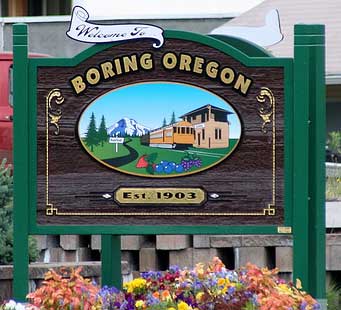
We head out early—6:30 a.m.—to ride some big miles. Dave meets me at my house near Mt. Tabor and we take the 205 bike path south before heading east on the Springwater Corridor, which is named after the former railroad line that followed the same route from 1903 to 1989, before it was converted into the 21 mile paved recreational trail that now sees over one million users annually. In the town of Boring, the trail disappears and we cross Highway 212, taking SE Richie Rd until it ends, and then a left on SE Kelso Rd. The rolling country roads provide little to no shoulder, but make up for it with the most incredible of backdrops—we take in an awe-inspiring view of Mount Hood, which from the west appears as beautiful as any mountain, anywhere in the world. Because it’s the weekend, and because it’s early, there is little traffic, and much to my surprise, not one hillbilly in an oversized truck slows down to yell at us (see: An Idiot’s Guide to Yelling, July 22, 2014).


When we hit Rt. 26, also known as the Mt. Hood Highway, we have a choice to make: take a right and ride with heavy traffic on the super busy four-lane highway, or go straight and take the longer, hillier, more relaxing, scenic route. We opt for the scenic route, dodging traffic across 26 like characters in Frogger, and continuing straight on Kelso Rd until it ends. We take a right on SE Bluff Rd, follow it to Sandy, and head east through the small town, before taking a left on SE Ten Eyek Rd. We continue on this road until it turns to SE Marmot Rd, which follows a seven-mile ridge known as the “Devil’s Backbone.” It received its hellish name because it was such a daunting task for Oregon Trail pioneers to descend their wagons down it, but today the rural road is one of the most beautiful bicycle rides in all of Northwestern Oregon—highly recommended for anyone who has a morning to kill. We keep on Marmot, which eventually turns into E Barlow Trail Rd. We follow this until it ends, before taking a right on E Lolo Pass Rd, which brings us into the town of Welches and back to Route 26. There’s a cafĂ©/bakery on the corner—the last stop for supplies for a long while. We opt to cross the highway to use the bathroom and fill our water bottles at the US Ranger Station.


Again we have another choice and again we decide to bypass Highway 26, riding east along its shoulder for less than a mile, before swinging a right on Still Creek Road. The pavement quickly ends and we head up the gradual incline of a narrow dirt road that parallels the small stream for which it got its name. There are no other vehicles in the thick forest, which is overgrown with tall monstrous pines whose shade keeps us cool from the late-morning sun. The road spits us out at Trillium Lake, where Dave gets a flat tire, which isn’t a big deal, because if you’re going to get a flat, there’s no better place to have it happen than at Trillium Lake, where the scenery is as good as it gets. As he works on his bike, we are granted an awe-inspiring view of Mount Hood, which from the south appears as beautiful as any mountain, anywhere in the world.


We take Trillium Lake Road back to Highway 26 and then follow the Mount Hood Highway as it heads north and becomes Route 35. We climb up to Bennett pass, which at 4,650 feet is as high as we’ll reach all day, and then go for a ride as we descend down the other side. We don’t quite reach 40 mph, but we come close as we tuck our bodies in as low as we can and bomb down a slope that seems to go on for so long that I eventually start to look forward to some more uphill. It eventually flattens out and we take a left on Baseline Rd and follow it into the tiny town of Parkdale. I look up at the mountain to my left and it reminds me of an enormous ice cream sundae with hot fudge swirls. This is a bad sign—if you start dreaming about food while riding big miles, that usually means it’s too late; that usually means you should have eaten thirty minutes ago. Fortunately, Parkdale has many food options to choose from—a brewery, a burger joint, and a BBQ. Unfortunately, we’re short on time and have to settle for a quick bite from the local grocery store. We eat a small lunch of deli wraps, chips, and bottles of soda, as we marvel at an awe-inspiring view of Mount Hood, which from the east appears as beautiful as any mountain, anywhere in the world.


We’re back on our bikes in no time, following the Dee Highway north before taking a left on Lost Lake Road. It’s close to 100 degrees outside and what shade we should have disappeared with the trees when the area was clear-cut for lumber. The sun bakes us as we travel uphill towards Lolo Pass. When we leave Lost Lake Road for the unpaved NF-18 (National Forest Route 18), the forest reappears, as does the cool shade, but it might be too late—the heat has gotten to Dave. He gets off his bike and pukes up his lunch. It’s sad to see a perfectly good meal go to waste, but it’s even worse to see a fellow rider in such agony. This will turn out to be the longest ride Dave has ever done in his entire life, but right now we still have fifty miles to go.


Normally, I might be concerned; I might be wondering how we’re going to get out of these woods. But with Dave, I’m not worried, for he’s one of the toughest men I’ve ever had the pleasure to know (when he’s not completing epic bicycle rides, he’s choking people out at jiu-jitsu tournaments). And I don’t know what you would expect a tough guy to do in a situation like this, but I’d expect him to drink some mountain water straight out of a stream and get back on his bike without complaining. And that’s precisely what Dave does. We complete the 3,415 foot climb up Lolo’s pass, which brings us so close to the mountain’s peak that you feel as if you can almost reach out and touch it—an absolutely awe-inspiring view of Mount Hood, which from the north appears as beautiful as any mountain, anywhere in the world.


We fly down Lolo Pass Road, which is paved, and find ourselves again in the town of Welches, filling up our water bottles at the Ranger Station. On the way back, we opt to take the more direct route, riding with traffic on Route 26, back to the city. The entire ride comes out to just over 160 miles, with almost 11,000 feet of elevation gain. But if you want to do just the loop and say that you circumnavigated Mount Hood, then I would suggest driving to the Welches Ranger Station and parking in their large lot. From there, the ride should be about 80 miles, completely circling Mt. Hood, which from any angle appears as beautiful as any mountain, anywhere in the world.


Tuesday, July 29, 2014

A Short Piece on Short Track


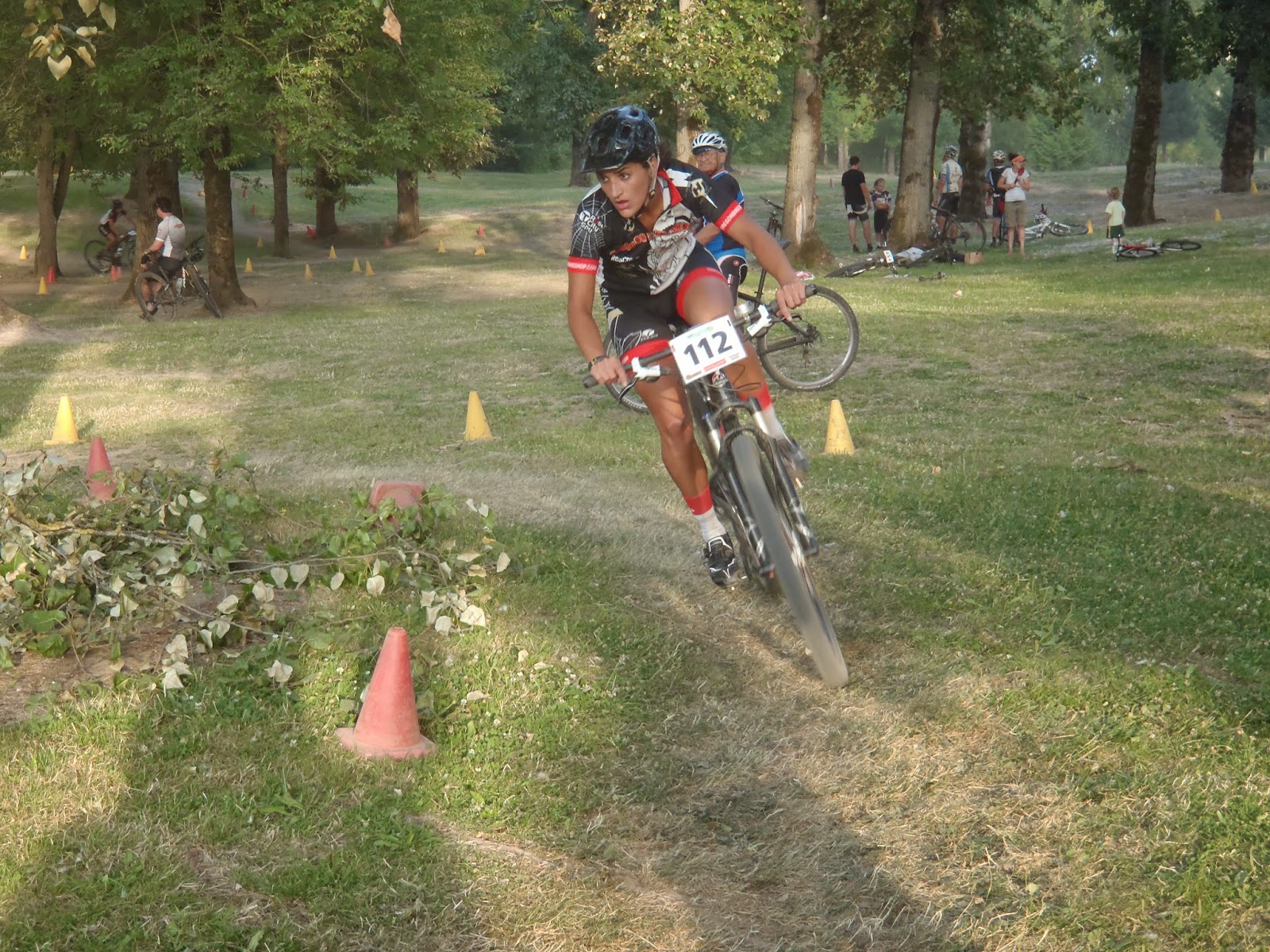
The whistle blows and we’re off. A couple dozen lead riders fly past their teammates who are waiting patiently in line on either side of the course. We shoot up a tabletop jump and dive down its back side. Another quick mound, up and down, and then a sharp 180 degree turn. We muscle to keep our tires in the thin, smooth, worn-down path that has been broken in tonight by the constant pounding of a thousand-plus tires. I take it a bit too fast. My back tire slides out, causing my bike to momentarily veer off into the rough stuff, getting my money’s worth out of my front shock. I adjust in time to hold off the pack of riders who are chasing close behind.


I’m sitting pretty, in fifth place, hanging on to the rear wheel of the rider in front of me. We ride up a banked turn to the left before shooting back down to the right. Another sharp left over a small hump, but we take it a bit too fast. The kid in front of me goes down. I don’t think—there’s no time to think—I simply react. I instantaneously jerk my handlebars to the left, hoping to skirt around my fallen competitor, but the gravel is too loose and I slide out, the left side of my body skidding across the hard dirt, taking a patch of skin from the bottom of my knee with it. As fast as I go down, I’m up, on my bike and back in the race. “Nice recovery,” a fellow racer says as he passes me. It was a nice recovery, for only a few riders are able to pass, but the damage is done—I’ve burped my front tire. It’s got about two pounds of pressure left in it, and I still have the majority of the loop to complete.


Mondays are usually not the day of the week that most people look forward to. For most people, Mondays mean back to work. But for those of us who participate in the Portland Short Track Series, there are eight Mondays during the summer that mean only one thing—race day! And instantly, Monday doesn’t seem so bad anymore. In fact, Monday suddenly becomes the best day of the week. Though the majority of riders choose to race mountain bikes, this short track series isn’t really “mountain” biking, at least not in the traditional sense. It’s more like cyclocross combined with motocross. The largest section of the course each week is an actual motocross track, complete with rolling jumps, table tops, whoop-de-dos, and banked turns. The remainder of the course can travel over a variety of terrain—loose gravel, grass, pavement, dirt, and tree roots. And though the venue never changes from week to week, the course always does.


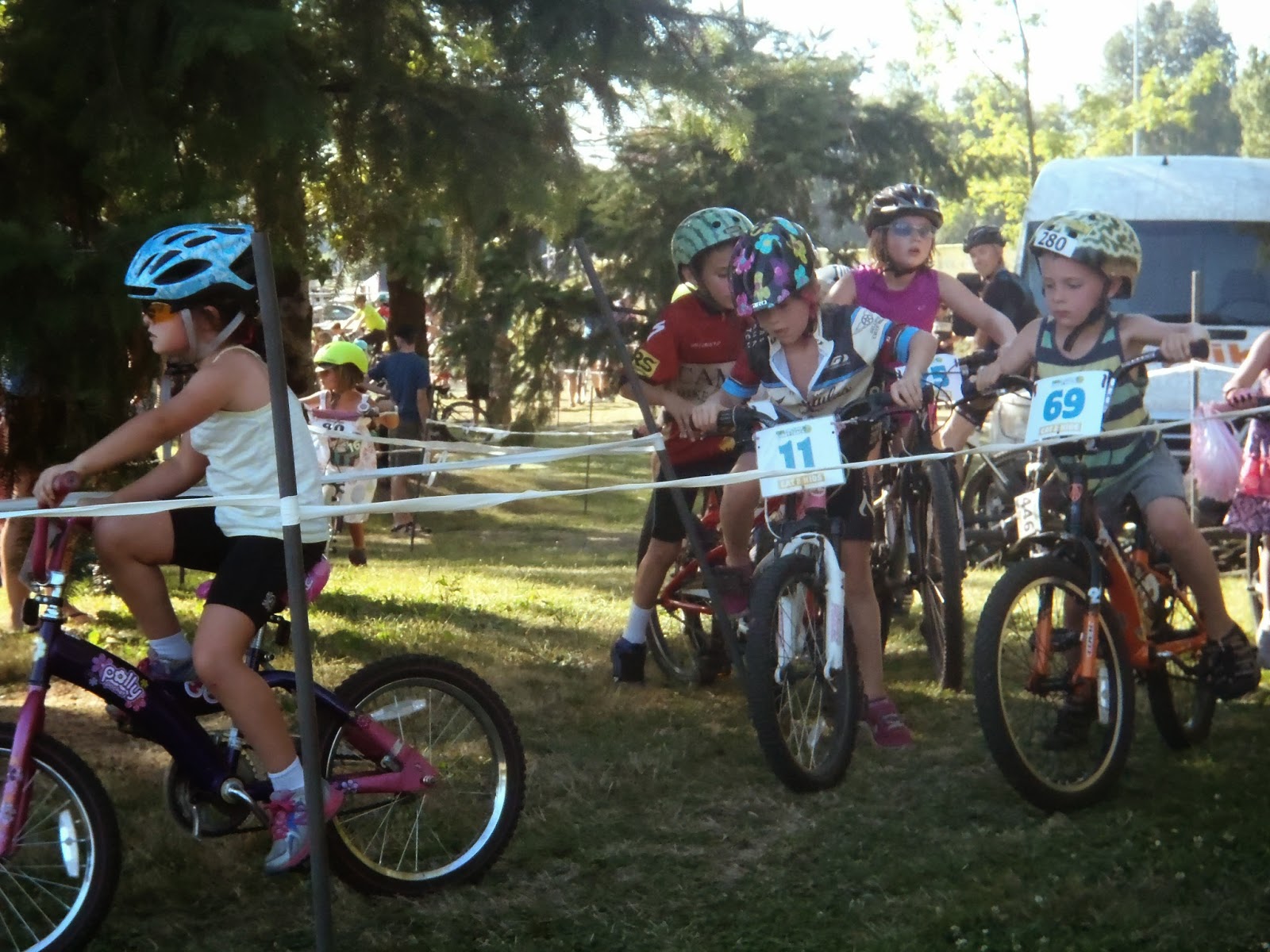
In my opinion, of all the weekly race series that Portland has to offer, none is more fun than Short Track. It doesn’t hurt that it's summertime and that the weather is almost always beautiful, but it’s so much more than that. Short Track feels less like a competition and more like an event, where everybody’s invited and everybody is happy to be there. No matter how your race goes, no matter what place you come in, it’s next to impossible not to smile afterward. Competitors come in all shapes and sizes, all backgrounds and ages. Children who look as if they just learned to walk, race every week, and there’s no better sign for the future of the sport. On the other end of the spectrum, men and women who are old enough to be my parents—some even old enough to be my grandparents—also race each week, and there’s no better sign for my future in the sport, because if they can not only ride, but race, these technical courses at that age, it seems as if anybody can do anything if they have enough passion for it. It’s hard to watch a race, any race, in any division, and not feel inspired.


But don’t get me wrong, though Portland Short Track often feels more like a family reunion or a music festival, it is a race, and we are competing. Unlike road racing, where there seems to be an unlimited amount of strategy involved, short track is more about technique, more about being fit. Anybody can sit back in a peloton and wait for the final sprint, but in short track there is no drafting. Once that first whistle blows, you’d better be ready to race, because you can guarantee that your competitors certainly are. You have thirty to forty minutes to see how far you can push your body, to see exactly what your limits are. Because the race is so short, you practically have to go as hard as you can from start to finish, and hope that you don’t bonk, or make any mistakes, because even just one simple slip can easily ruin your race. Which has just happened to me right now.


After sixteen races in nine weeks, almost a hundred laps around this track, I somehow wait until my final one to fall for the first time. And though I do get up fast, my tire is practically flat—rubber riding on rim. If this was any other week, there’s a good chance I’d drop out of the race and take that dreadful DNF, but tonight is different—tonight I have an entire team counting on me. Nine fellow riders waiting for their turn to go. So, I ride it out, keeping my weight as far back as I can, crawling over obstacles, inching around turns. Riders pass me at will. Riders that I would usually smoke. But there’s not much else I can do, but sit back and pedal. I finally come around the last turn and slap the hand of the teammate waiting for me. I’m disappointed, but still, I can’t help but smile. The race goes on. Our team finishes strong. And we crack beers and celebrate the season in style. Now Mondays are just Mondays again. And all we can do is count down the days—only 41 more weeks until Short Track season starts!


Tuesday, July 22, 2014

An Idiot's Guide to Yelling


We were having a wonderful outing, my girlfriend and I. It was her first bicycle tour, and though I had previously ridden across the United States twice, it was the first time I had ever traveled by bike with a female companion. The weather was perfect, warm and sunny, and the route was easy, flat and straight. It’s about a thirty mile ride from Portland, Oregon to the small town of Estacada, which sits at the base of Mount Hood on its eastern side. Half that distance can be traveled on a bicycle path, while the remaining fifteen miles are on country roads. After traveling through the aptly-named town of Boring, we left the bike path and headed down Richey Road. This is where we were riding when a man in a giant pickup truck thought it was appropriate to pull up beside me, yell obscenities out his window, rev his engine, blow exhaust in our face, and then speed off, his arm extended out the window, his middle finger high in the air. That was nice of him.

           
We arrived in Estacada by early afternoon and enjoyed lunch from the best Mexican food cart in Oregon, before heading to Milo McIver Park to camp for the night. We set up our tent in the hiker/biker site—which is only five dollars per person, per night—and then went for a swim in the cool mountain water of the Clackamas River. After playing some disk golf on one of the park’s two courses, we headed back into town to get some ice cream. On the way back to the park, another man in a giant pickup truck again thought it was appropriate to pull up beside me, yell obscenities out his window, rev his engine, blow exhaust in our face, and then speed off, his arm extended out the window, his middle finger high in the air.

           
Now, as I mentioned earlier, I’ve ridden my bicycle across the country twice, and I can’t recall either time, having anybody slow down to yell obscenities at me out of their window, and suddenly, it happens twice in a matter of hours. Perhaps it was because I had a beautiful woman with me, but regardless, yelling at anyone out your window is almost always inappropriate. What do these guys think they’re going to accomplish? Do they think I’m going to give up riding my bicycle because some redneck hillbilly yelled at me? Do they even realize that I can’t understand what they’re saying? Over the noise of their engines, their words sound about as clear as the adults on old Charlie Brown cartoons. Sure, you can always make out a few words, like “ass,” or “dick,” but then, I just assume that they’re saying such phrases as “You’ve got a really nice ass.” Or “I have a really small dick.” But everybody already knows you have a small dick by the size of your truck. There’s no need to pull up beside us to reiterate it.
           
Anyway, this recent incident has gotten me thinking about the topic of yelling, and I’ve begun to wonder if people even know when it is or isn’t appropriate to yell, so I’ve developed the following list of when and when not to yell:

Inappropriate—Men yelling out windows. Come on guys, I don’t care if you’re yelling at another man or woman, knock it off. Nobody cares what you have to say. And you look like a huge coward doing it. It doesn’t take much courage to yell at someone and then speed off. If you have something to say someone, pull over and say it to their face. Unless it’s about how small your dick is, because we already know.


Appropriate—Women yelling out windows. When women yell out windows, it’s almost always in good fun. Rarely do they do it for malicious reasons. Sometimes it can actually make a guy feel pretty good. Like this one time as I was standing outside a Walmart in Kentucky, chugging chocolate milk, when a severely obese woman yelled at me, “Milk does do a body good!” Thanks. That made my day.

Inappropriate—Yelling into a phone. There’s no need to ever yell into a phone. Phones were invented so we don’t have to yell at each other. My Eastern-European neighbor doesn’t seem to understand this. She spends at least one hour everyday yelling into her cell phone about how much she hates her husband. Just go ahead and murder him already, but please stop yelling into your phone.


Appropriate—Yelling at a sporting event. That’s really what you’re paying for when you go to a sporting event. And if it gives your home team even the slightest advantage, yell as loud as you can. But if you’re an athlete, and you have possession of the ball, and the entire audience is chanting “Defense. Defense. Defense…” Just pretend they’re saying “Offense.” Then it seems like they’re rooting for you.

Inappropriate—Yelling at a sporting event on television in a public place. You do realize that they can’t hear you? Plus, do you think the guy sitting at the barstool next to you really enjoys your beer soaked, chicken wing flavored commentary on how bad the Oakland Raiders are? We all know how bad the Oakland Raiders are.


Appropriate—Yelling at a sporting event on television in the privacy of your own home. I’m a firm believer that if you yell loud enough at a television in your living room, you can affect the outcome of the game. Why do you think the Spurs destroyed the Heat in the NBA Finals this year? You’re welcome San Antonio.

Inappropriate—Yelling in a church, at the opera, at a play, during a wedding ceremony, etc. If people are sitting down, you shouldn’t be yelling.

Appropriate—Yelling for help. If you need help, try yelling. If you just lay there quietly, you’re probably not going to get anybody’s attention.

Inappropriate—Yelling after dark in a residential neighborhood. Some of us are trying to sleep!

Appropriate—The Annual “STELLAA…” Yelling Contest in Bay St. Louis, Missississippi.

Inappropriate—Yelling on a Ferris wheel.

Appropriate—Yelling on a roller coaster.

On the fence—Heckling. Sometimes it’s alright to heckle, other times, not so much. Please use your discretion.


I hope this helps. Next time you feel the need to yell, ask yourself if it’s an appropriate situation before letting loose. Unfortunately, the people that need this most probably won’t ever read it, primarily because they’re from towns like Estacada and Boring and don’t know how to read. In conclusion, I will leave you with a quote from one of contemporary society’s most famous yellers:

“Basically, I started on stage yelling, and then I yelled some more,
and then I yelled even louder. I’m modulated now.
I’ve found that there are a lot of other ways
to get across anger without just yelling.” – Lewis Black


Tuesday, July 15, 2014

S.T.O.P. Treating Soccer Like a Real Sport

In my blog last week, I briefly mentioned my hatred of soccer (see: “One Week in July in America, 2014). Well, this seemed to have upset at least a few of my readers. As a result, I’ve decided it’s only fair to explain myself and make it perfectly clear why the game is so godforsaken awful. And to all you soccer fans out there, before you vow to never read my blog again, please remember that this is supposed to be comedic, and is in no way a comment on you as an individual. I like you. You aren’t horrible. Soccer is.  And here is a list of five reasons why:

#1) Soccer is boring. It is literally just a bunch of men running around, kicking a ball. And I know soccer enthusiasts will argue that there’s much more to it, like “strategy” and such, but I can assure you, there isn’t. It is nothing more than men running around, kicking a ball.

     
 #2) Soccer is boring. Games often in a score of 0-0. This is after regular time. Plus “stoppage” time, whatever that is. Plus overtime. Plus stoppage time in over time. Finally, they’ll have a shootout, which even I admit, can be quite exhilarating. So, why even play the game? Why not just have shootouts? It’s what we all really want, plus it will save you a few hours of your day otherwise wasted on watching men run around, kicking a ball.

#3) Soccer is boring. Over the past two centuries, several sports have been derived out of soccer, including rugby, hockey, and basketball. In essence, they’re basically nothing more than faster paced, more exciting, higher scoring versions of the same game. The objective hasn’t changed—put a round object in your opponent’s goal more times than they put it in yours. Even the Native Americans, in the form of lacrosse, developed a game more exciting than soccer, and they were thought to be savages.

#4) Soccer is boring. Players try desperately to make the game appear more exciting by jumping in the air every time any contact is made, and then diving on to the ground, before flopping around like a fish out of water. We know that it’s merely a ruse because they almost always immediately get back up, to continue running around, kicking a ball. Though basketball players are also known for these theatrics, at least when they take a dive, they have to land on hardwood, not soft grass.

#5) Soccer is boring.

If there are any soccer fans still reading at this point, I thank you for your patience and your ability to take a joke. But I fully understand if I have alienated all the soccer fans, for my writing is probably much too exhilarating for them to handle. And for those of you who also despise soccer and are wondering, if I hate something so much, why not just let it be? Well, that’s simple—if your friends were addicted to hard drugs, would you just let it be? I don’t see how soccer is any different. In recent years, as soccer becomes more popular in the United States, I’ve begun to lose friends to their horrible addiction. “Steve, do you want to do a bike race on Saturday?” “Sorry, I can’t. There’s a soccer game.” “Neil, come downstairs and hang out with the rest of us.” “I’ll be down when the soccer is through.” Lately it seems that the soccer is never through.

Even worse, it has recently become “cool” or “hip” to like soccer. This is how most epidemics start. In fact, the majority of people I personally know that like soccer, don’t even like sports to begin with. Now, how does that make any sense? Addiction—that’s how. They’ll have excuses of why they like the game. “I used to play,” seems to be the most popular one these days. Well, I was once forced to played soccer myself, and you know what? I hated it back then, too! I also used to play rugby, but that doesn’t mean I like watching it. And I currently race bicycles, but I certainly don’t watch bicycle races—because they’re boring!

I know that most adults are probably beyond the point of being saved, but that doesn’t mean children aren’t. Soccer enthusiasts have taken a page straight out of the drug dealer handbook and have begun to target children at a young age. When I was a child, there was a program called D.A.R.E. (Drug Abuse Resistance Education), “to keep kids off drugs,” in which police officers would go into classrooms and try to persuade children to never do drugs (note: it didn’t work). I propose that we start a similar program called S.T.O.P. (Soccer Termination Or Prevention) “treating soccer like a real sport.” We can send true professional athletes, like basketball and hockey players, into schools to warn children of the dangers of soccer before it’s too late.

It’s going to take a lot of work to keep kids off soccer, and so, to better understand exactly what we’re dealing with, I’ve decided to take it upon myself to infiltrate a soccer crowd on the game’s biggest day. I head down to Pioneer Courthouse Square, or “Portland’s Living Room” as it’s also known, where they are showing the World Cup Finals on a giant screen. I already have a Euro-mullet, so I should fit right in, but to be extra careful, I wear an old rugby jersey, hoping that no one can tell the difference, and chug a beer, so my breath smells like everyone else’s. I’m a bit nervous. Though, I’ve been falsely accused of being a narc before (see: The World Naked Bike Ride, 6-9-14), this is the first time that I really am one.

There’s an estimated 7,000 fans at the square, and like true addicts, they can’t take their eyes off the giant screen in front of them. They hoot and holler and break into applause, even though nothing is happening—only men running around, kicking a ball. “What’s the score?” I ask a man next to me, trying to fit in. “Zero, zero,” he says in a heavy British accent (obviously). “What team are you for?” he adds. Oh, no!!!!! I’ve been had. What team? How am I supposed to know which teams are playing? I must really look like one of them—disgusting. “They both have strong squads this year,” I reply, trying desperately to save myself. “I’m more just a fan of the game, no matter who’s playing.” I scurry away, trying hard not to throw up over the words that just came out of my mouth.

I circle the crowd, trying to sneak pictures of the worse assailants. I see three men wearing scarves. Scarves! In July? The only other people who wear scarves in July are hard drug addicts. I must document this for future reference, or perhaps for an anti-soccer billboard. I raise my camera, but just as I snap my photo, one of the men turns his head. Oh, shit! I’ve been had. What do I do? Should I pretend to watch the game? But that would make me one of them. This must be how narcs feel when they’re pressured to smoke crack to prove that they’re not cops. How am I going to get out of this jam? Please God, don’t make me watch soccer…and then the rain starts, and the thunder, and the lightning. I’m saved! I pretend to run for cover and then hightail it the hell out of there. It never rains in July and there’s never lightning in Portland. God must be real, and he must hate soccer, too. 

I head for home, where there are plenty of more exciting things to do, like staring at the ceiling, or watching my grass grow. On the way, I get thinking about soccer and come to the realization that maybe we don’t need to get rid of it entirely, but simply make some changes, to make it more exciting. First of all, instead of a net, let’s make each end of the field a scoring zone, and make each goal worth, let’s say, six points. And how about we let the players use their hands—go ahead, pick up the ball and run with it, and throw it, too, if you want. And why not have them tackle each other—if they’re going to pretend to get hurt, why not really get hurt? And instead of calling it soccer, let’s call it by its real name—what the rest of the world calls it—futbol. But in our own language, of course—football. Now, that would be something worth watching!


Tuesday, July 8, 2014

One Week in July in America, 2014

This blog will start with a Bobcat crying and end on a saddle, but not on a horse. In between, there will be alligator eating, zydeco dancing, fireworks, Euro-mullets, strippers, and a trip to the emergency room. If none of this sounds interesting to you, then I recommend that you quit reading this blog right now. In fact, if none of this sounds even remotely interesting to you, I recommend that you quit reading all together, because apparently, you are very hard to please.
            When I first decided to write a weekly blog, I worried that I might not be able to find something worthy to talk about every seven days. As it turns out, the opposite seems to have happened—I have so much to say that I know I’ll never get around to it all. This past week in particular, such amazing things happened—each worthy of its own blog post—that I had trouble deciding which one to address. So, I’ve decided to discuss them all, if some only briefly. I figure it could be an interesting social document, to help future generations better understand what a typical week was like in America in 2014. My hope is that a hundred years from now, some future American might grow tired of their virtual reality sex chamber and decide to do some historical research. Perhaps they will pour themselves a large mug of Mountain Dew Cool Ranch Dorito Blast™ soda pop, strap on their Weblet®,  and surf Twitoogle Book© for: “What were Americans up to a century ago?” Then maybe, just maybe, they will stumble upon this blog post. So, here goes: ONE WEEK IN JULY IN AMERICA, 2014.
          
  Bobcat Goldthwait came to town. Some of you might remember Bobcat from the Police Academy franchise, (he’s the guy with the unusual, high-pitched voice) but most of you probably won’t remember him at all. He was a somewhat famous comedian in the 1980’s and acted in several forgettable films and television shows over the course of the next two decades. About ten years ago he retired from stand-up/acting to pursue a career as a film director, developing a new generation of fans, including myself. His films are rather unconventional, to say the least. They approach topics such as bestiality, autoerotic asphyxiation, and mass murder. And they’re hilarious! (If you find those kinds of things funny, that is.) Though, his latest film really threw us fans for a loop. Willow Creek is a found-footage horror film about Bigfoot, and when I found out that they were premiering it at the Hollywood Theater in Portland, and that Bobcat would be in attendance, I just had to go. And I wasn’t the only one. The place was packed—Sold Out! And upon the applause the film received, Bobcat broke down in tears. Apparently, the film didn’t go over as well in other cities. It truly made me proud to be a Portlander. (There will be more to come on Bigfoot in future blogs.)
            What’s next? Euro-mullets! When I was in college, my rugby club had a tradition of giving our rookies funny haircuts as part of their initiation. My senior year, I decided to also partake in the fun and cut my then very-long hair into a mullet. After a few weeks, when the rookies had all shaved their heads and my mullet remained, my friend Patrick asked why I hadn’t cut it. “Because, after I graduate,” I answered. “I’ll have to get a real job and I’ll never be able to have a funny haircut again.”
            “I hate to break it to you,” Patrick replied, “but I can never see you having a ‘real’ job.”
            Patrick was right. Ten years later, and I’ve never gained employment where the style of my hair would have been considered in the hiring process. So, to commemorate a decade of never finding a “real” job, I decided to cut my hair into a “Euro-mullet.” I would later find out that the haircut is actually quite popular right now among World Cup soccer players, but I want to emphasize that my haircut in no way reflects any positive feeling towards the game. I currently hate soccer, I’ve always hated soccer, and I always will hate soccer! (There will be more to come on my hatred of soccer in future blogs.)
            Emergency room. My teammate Emily used to have the most beautiful legs. That is, until she met me. I remember one of her first races where she scratched up her legs during a minor crash. “What should I do?” she asked me. “Rub some dirt in it and get back on the bike,” was my response. Flash forward two years. Last week we’re training at the Gateway Green and I told her that it’s possible to ride the entire course without using your brakes. On the last lap of the night, I came around the final turn to see her bike on the ground, and her walking away from it. “What happened?” I asked. “I tried not using my brakes,” she answered. “Are you alright?” I asked. “My knee,” she said. “You seem to be walking fine,” I replied, hoping to reassure her that it wasn’t that bad. Then she turned around. This time, rubbing dirt in it wasn’t going to do the trick. One trip to the ER and a handful of stitches later, and I think we both learned a valuable lesson: DON’T EVER LISTEN TO ANYTHING I SAY!
            Fireworks. My girlfriend and I went downtown to watch the fireworks on the Fourth of July. To make a long rant short: I don’t understand why our nation sets off fireworks to celebrate our independence. 1) They’re a Chinese invention—why do we celebrate something American with something Chinese? 2) They’re expensive, and I’ve found through experience that the people who spend the most money on fireworks are usually hillbillies who have the least amount of money to be spending on fireworks. When you purchase fireworks, you are literally sending your money up in flames. 3) Shell shock—veterans of foreign wars often times hate fireworks, and can you blame them? It sounds like warzone when they’re going off! What a way to celebrate our independence—by forcing those who fought for our independence to hide in their basements and wear earplugs so they don’t have horrific flashbacks. 4) Every year a few drunken hillbillies across the country blow their hands off (okay, maybe this isn’t such a bad thing) 5) They’re a Chinese invention!!!!!!!!!
  
 Strippers. My girlfriend has developed an admiration for strippers, so, after the fireworks, we headed over to Club 205, who claim to have the "Sexiest Girls in Town.” I thought that was just something that all strip clubs said, but I’ll be honest, these girls can do things on poles that you wouldn’t believe. (To future Americans: before the invention of the virtual reality sex chamber, people paid real-life women to remove their clothes and dance for them. I know, it does sound lame, doesn’t it?) The next morning, my girlfriend asks me why I don’t like strip clubs. “It’s like going to a buffet,” I said, “except you can’t eat anything. You can only look at all the food. And then you have to go home and eat quinoa.” She didn’t like that answer. I think it came out wrong. I love quinoa! I eat it every day!
            Zydeco dancing and alligator eating. We went to the Waterfront Blues Festival, where we ate alligator and danced to zydeco music. This blog is already running a bit long, so let’s leave it at that. (There will be more to come on zydeco dancing in future blogs. I can’t promise anything more on alligator eating.)
            Saddle Mountain. We drove out to the coastal range and climbed Saddle Mountain. After 2.5 miles and 1,600 feet in elevation gain, we reached the summit, where you can see the Pacific Ocean to the west, and as far as Mount Hood to the east. It was an absolutely beautiful sight, but not as beautiful as the girl standing next to me, who I would choose any day over any stripper, or buffet, or stripper buffet, for that matter. Subsequently, we returned home and had quinoa for dinner.

         So, future generations: that’s what people in America are doing in the year 2014—making Bobcats cry, watching strange films, sporting funny haircuts, burning money, watching strippers, climbing mountains, dancing to swamp music, eating exotic animals, and inadvertently sending their friends to the emergency room.  Okay, you can go back to your virtual reality sex chamber now. Sorry for wasting your time.


Wednesday, July 2, 2014

An Accidental Health Nut

If it wasn’t for sweet potatoes I don’t know if I’d exist right now. There’s a good chance that I may have just continued to lose weight until I withered away to nothing—like that Stephen King novel where that guy just keeps getting thinner and thinner and thinner and thinner. What was the name of that book again? I feel like I should know it. Oh, it doesn’t matter, nobody reads Stephen King. Anyway, I was getting thinner and thinner and thinner, until I realized I was allowed to eat sweet potatoes.
            A month ago, I went on a 28-day detox—Dr. Axe’s Secret Detox, to be more precise. According to Dr. Josh Axe, DC, CNS, (I don’t know what those letters mean either) it’s the same nutritional program used by American Olympians, as well as Team Garmin, a world-renown cycling team that competes in the Tour De France, among other high profile races. And since I often times like to pretend that I’m some sort of high-profile athlete, I thought Why not try the detox? And, it apparently cures cancer. That’s right, people with cancer have gone on the detox and their cancer has gone away. Apparently. Now, I don’t believe that I had cancer before the detox, but if I did, it’s most certainly gone now. Take that cancer! (I can’t emphasize enough that this is intended to be humorous and I am in no way poking fun at people with cancer. It is meant only to be a joke. I apologize if it offended anyone. What’s that? Oh, I’m so sorry, how was I supposed to know that your aunt had cancer? Well, we all know someone who’s had cancer. Oh, she died of cancer? Well, let’s reiterate that I’m not making fun of people with cancer, but rather the disease itself. Aren’t you allowed to make fun of diseases? You’re not? Sorry, I didn’t realize that. Let’s just pretend that I never wrote it, and go on with the rest of the article.)
            Dr. Axe charges about $500 for his detox program, which consists of a binder with just over 200 pages and a bunch of DVD’s that tell you the exact same thing as the binder (Unfortunately, I read the entire binder first). Now, I’m not implying that Dr. Axe is a con artist, because, as you will soon find out, I wholeheartedly believe that the detox works, but five-hundred dollars? Really? What happened to the good old days when doctors genuinely believed in helping others? If Dr. Axe really believed that his detox program can reverse the effects of cancer, then shouldn’t he be encouraging people to go on it, instead of worrying about a profit? When Dr. Jonas Salk developed the first successful polio vaccine in 1957, he gave it away for free. The guy could have been a millionaire, but he knew there were more important things than money—such as life. Over fifty years later, people continue to tell that story, and the name Jonas Salk is still remembered. Do you hear that Dr. Axe? Do you think people will recall your name in fifty years? Quit swindling them, and tell them what you know!
            In Dr. Axe’s defense, The Secret Detox really isn’t much of a secret. The entire 200+ pages can be summed up in about four words—EAT HEALTHY YOU IDIOTS! After all, it is 2014 and we have a pretty good idea of what’s good for your body and what’s bad for your body. Organic fruit—good. McDonald’s—bad. Organic vegetables—good. Ice cream—bad. You don’t have to be a genius to figure that out. When someone hands over $500 to Dr. Axe, they’re in reality buying a placebo, like all those nutritional pills that people have been peddling lately. You know, the ones that promise you’ll lose weight if you work out for three hours a day, eat healthy, and take this one pill. I have news for you—you’ll lose weight just by working out and eating healthy. The pill does nothing!
            After some thought, I’ve decided to give away the secret—it’s in the best interest to humanity. Dr. Axe could probably sue me for doing this, and I hope he does, because that means people are actually reading this blog. But I imagine that he’ll never know the wiser. After all, I still haven’t heard back from Zuckerberg (see: An Open Letter to Mark Zuckerberg, May 6, 2014). Actually, on second thought, I really don’t want to be sued. So, you can either pay Dr. Axe $500, or you can follow Jon Penfold’s Super Non-Secret Detox. It’s quite simple: No sugar, no soy, no dairy, no GMO’s, no corn, and no gluten. If somehow you find something to eat that doesn’t contain any of these things, make sure that it’s organic, grass fed, and free range. It’s really that simple: eat fruits, vegetables, and meat that aren’t contaminated by any chemicals. And drink lots of water. As much as you can. All day. Yes, you’ll have to get up in the middle of the night to go to the bathroom.
            Because I’m somewhat of an athlete, and because I burn a lot of calories every day, it took me a while to figure out what to eat. Meat and vegetables are great, but you can only eat so much before you start to crack. Luckily, I discovered sweet potatoes, which go wonderfully with organic, free-range eggs. And brown rice pasta, which tastes enough like regular pasta that if you douse it in organic tomato sauce, you can hardly tell the difference. And quinoa, oh glorious quinoa, which goes well with just about everything. I put it in salads and wraps and soup, and use it as a replacement for oatmeal. With enough organic banana, almond butter, honey, and raisins, you can hardly tell the difference. And drink lots of water.
            I’m going to warn you, it’s expensive to eat this way. Good, healthy food on average costs about 50% more than “regular” food, and because it’s not as filling, you’ll probably have to eat twice as much to be satisfied. So, you’re looking at more than double your grocery bill (but since you’ll never be able to eat out again, you’ll probably break even). But, to be honest, I feel better than I’ve felt in a long time. My body fat immediately dissolved, leaving me the lightest I’ve been since high school. My lower back doesn’t constantly ache anymore. My energy levels are as high as I can remember—I went from eight cups of coffee a day, down to one. And I won my first ever road bike race, and though I’ll probably never make Team Garmin, boy, does it feel good to win. There’s only one concern I have with the detox—I still want a cheeseburger so bad!
            They claim that your taste buds will change over time, but that doesn’t mean your memory will be erased. Sure, I’ve grown to love sweet potatoes and quinoa and brown rice pasta, but I can still remember how great a cheeseburger tastes, and how sweet ice cream is on the tongue, and tacos and pizza and sandwiches and French fries. Maybe we can find a happy balance. I feel great, but I love junk food. I think I will incorporate a cheat day into my diet. Being healthy 6 out of 7 days a week is far better than the other way around. Some “experts” even claim that a cheat day will further boost metabolism, causing you to lose even more weight. But like I said in the start of this story, I’m already getting pretty thin. I don’t know if I should be losing any more weight. Maybe I should stick to the detox diet and see what happens. But on the other hand, screw it, a cheeseburger and a beer does sound pretty good right about now. I’ll go back to being a health nut tomorrow.